

Your cart
There are no more items in your cart
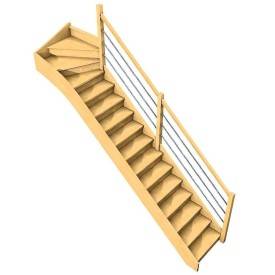
A traditional wooden staircase for a smooth, easy climb.
Available in fir, beech or oak
 1
In stock
Ships within 10 days
3
In stock
Dispatched within 10 days
1
In stock
Ships within 10 days
3
In stock
Dispatched within 10 days
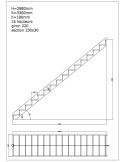
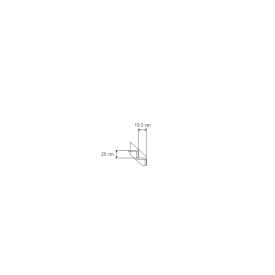
With a tread depth of 22 cm and a rise of 18 cm, the Gavia staircase falls within the comfortable staircase range.
Delivered as a kit with a raw finish.
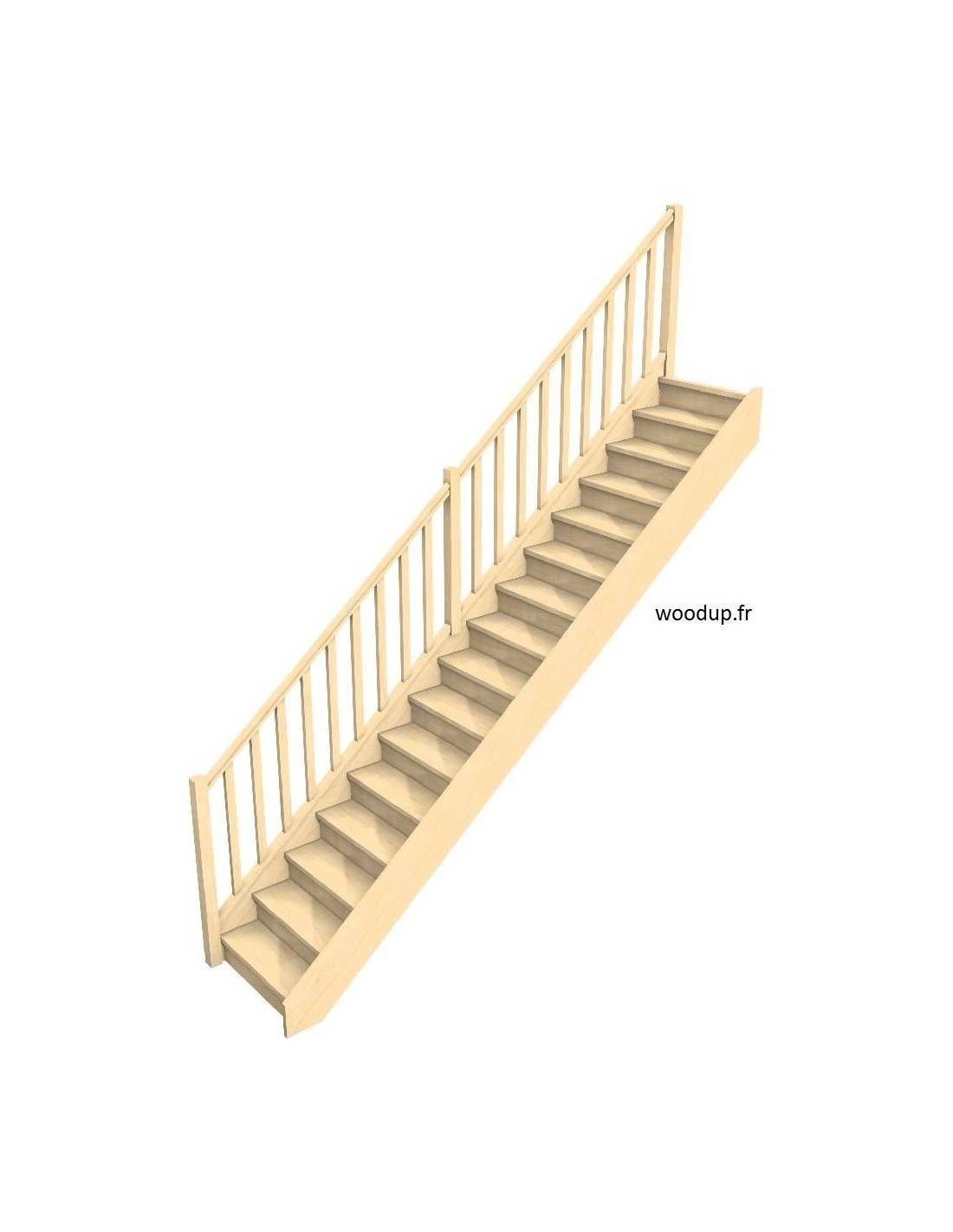
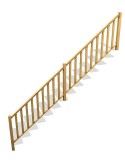
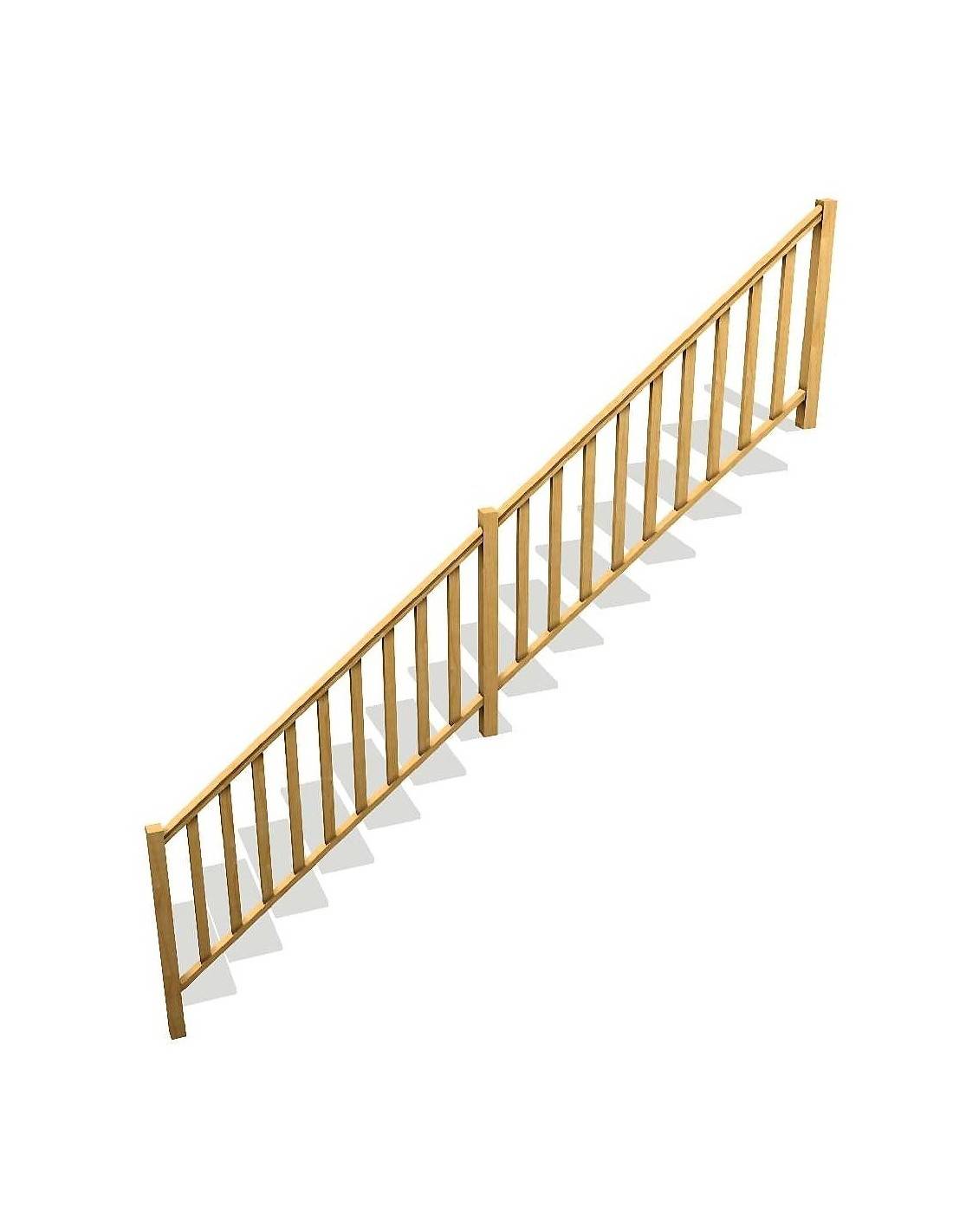
Sold with a wooden balustrade with spindles.
Authentic wooden staircase that brings character to your interior or exterior.
Staircase width 80 cm / staircase + balustrade: 82 cm
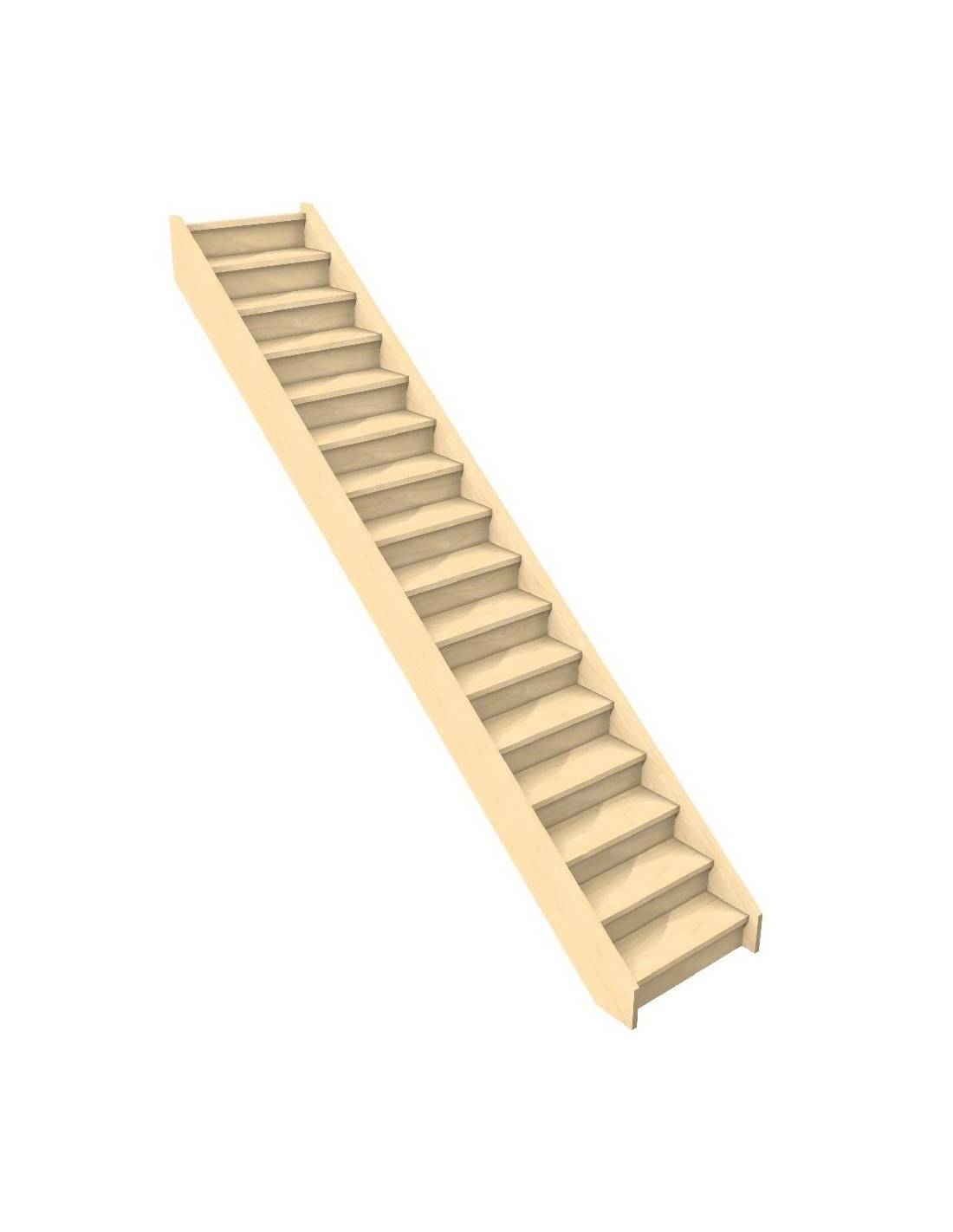
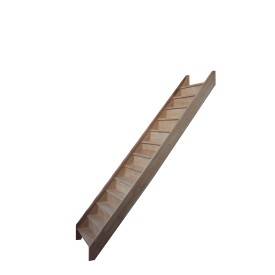
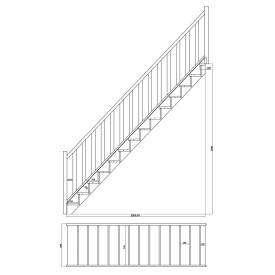
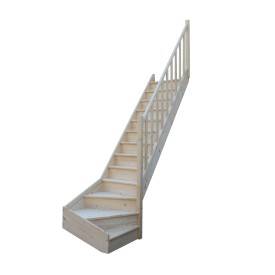
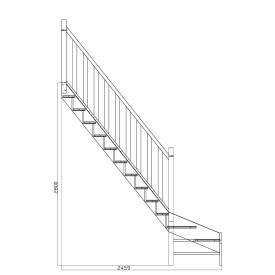
GAVIA straight staircase Comfort range — laminated beech, oak or fir, height 288 cm. 15 steps, width 80 cm, riser height 18 cm, tread depth 22 cm, section 210x30 mm, footprint 336 cm, stairwell opening 336x82 cm. Tread depth 22 cm and riser height 18 cm: superior climbing comfort compared to the standard range. Fixings and instruction manual included. Finishing required before installation. Pre-drilling required on beech and oak. Interior use only. Available with or without risers depending on the desired configuration.
The GAVIA straight staircase belongs to the Comfort range from WoodUp, characterised by a riser height of 18 cm and a tread depth of 22 cm, in accordance with the Blondel formula for comfortable use (2x18 + 22 = 58, within the ideal range of 59 to 64). Available in beech, oak or laminated fir, it offers a gentler ascent than the Standard range (riser 20 cm / tread 19 cm), particularly appreciated for intensive daily use or for elderly users.
Designed for a floor-to-floor height of 288 cm with 15 steps, its footprint is 336 cm for a stairwell opening of 336x82 cm. The tread section is 210x30 mm. The comfort of the Comfort range comes at the cost of footprint: 336 cm versus 259–273 cm for Standard straight staircases — to be checked against the available space.
| Specification | Description |
|---|---|
| Type | Straight staircase, interior, kit |
| Range | Comfort (riser 18 cm / tread 22 cm - Blondel formula) |
| Available timber species | Laminated beech / Laminated oak / Fir |
| Floor-to-floor height | 288 cm (trimmable) |
| Number of steps | 15 |
| Riser height | 18 cm |
| Tread depth | 22 cm |
| Width | 80 cm without handrail / 82 cm with handrail |
| Tread section | 210x30 mm |
| Floor footprint | 336 cm |
| Recommended stairwell opening | 336x82 cm (without handrail) |
| Risers | With or without, as preferred |
| Handrail | Optional — can be added after assembly, reversible left or right |
| Finish | Raw wood — finishing required before use |
| Use | Interior use only |
Check the available footprint (336 cm minimum) and the stairwell opening (336x82 cm recommended) before ordering. The 336 cm footprint is significantly larger than Standard staircases — ensure the room allows 336 cm in a straight line in the direction of ascent.
Assemble according to the instruction manual, pre-drill on beech and oak. Fix to the floor and upper support. Two people recommended. Apply the finish after complete installation. The handrail can be added after assembly — reversible left or right.
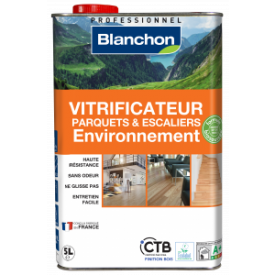
Apply a finish suited to the chosen timber species before first use. For fir: 2-coat varnish or oil-wax. For beech and oak: 2–3 coat varnish recommended (maximum wear resistance). Renewal every 5–7 years. Cleaning: damp cloth, pH neutral.
The GAVIA Comfort range is the straight staircase to choose when climbing comfort takes priority over compactness. Its tread depth of 22 cm allows the foot to be placed fully on each step, without overhang at the front — a noticeable difference in daily use, particularly for elderly people, children, and when carrying objects. The trade-off is a footprint of 336 cm — it is essential to verify that the available space permits this.
Important before purchasing: the Comfort range requires 77 cm more floor space than a Standard CHEVALARD for the same height (336 vs 259 cm). If the space exceeds 336 cm, the GAVIA is the best choice in terms of comfort. If the space is insufficient, the quarter-turn Comfort models (SELA, FURKA, BAVAT) allow you to benefit from the 22 cm tread depth within a reduced footprint.
The Blondel formula (2H + G = 59 to 64 cm) defines the optimal relationship between riser height (H) and tread depth (G) for a comfortable staircase. For the GAVIA: 2x18 + 22 = 58, which is at the lower end of the range but compliant. A tread depth of 22 cm with a riser height of 18 cm produces a natural stride similar to walking on a flat surface — this is the most ergonomic combination for an interior staircase.
The Standard range (CHEVALARD, FONTBRUNO) has a riser height of 20 cm and a tread depth of 19 cm — reduced footprint, acceptable comfort. The Comfort range (GAVIA, FURKA, SELA, BAVAT Comfort) has a riser height of 18 cm and a tread depth of 22 cm — gentler ascent, full foot placement, but a footprint 50 to 80 cm larger. The choice depends on the available space and the importance placed on comfort.
Yes. For 270 cm, the cut is approximately 18 cm on the stringers, leaving the riser height unchanged (18 cm x 15 = 270 cm exactly). The GAVIA is ideally designed for 288 cm — for 270 cm, it works perfectly without any cut if one step is removed, or with a slight cut if all 15 steps are retained. Refer to the diagram in the instruction manual for the precise calculation.
The GAVIA is sold without a handrail. The handrail is to be ordered separately from the WoodUp accessories range. It can be fitted after the staircase has been assembled and is reversible left or right. See the accessories section for handrail models compatible with an 80 cm straight staircase in the Comfort range.
Fir is the economical option — suitable for moderate use, paint or varnish finish. Laminated beech is the balanced choice — superior resistance, regular grain, light tone. Laminated oak is the premium quality choice — pronounced grain, warm tone, maximum durability. For a main staircase with heavy traffic, beech or oak are recommended. Fir is suitable for standard family use.
A straight staircase is the simplest solution to install and the easiest to secure with a handrail. It is suitable if a space of 336 cm in a straight line is available and if the stairwell opening is aligned along that same axis. Quarter-turn Comfort staircases (SELA, FURKA) are preferable when the stairwell opening requires a change of direction or when the space does not allow 336 cm in a straight line.
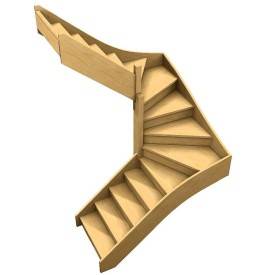
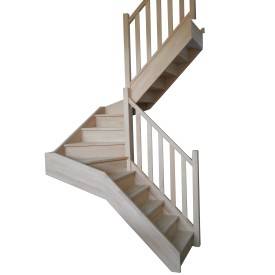
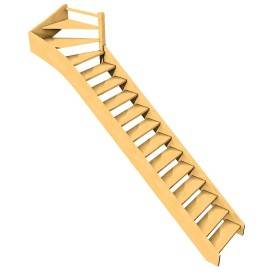
SELA - Quarter-turn top Comfort range, riser 18 cm, tread 22 cm
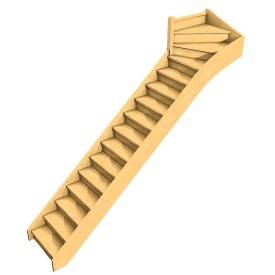
FURKA - Quarter-turn top Comfort range, riser 18 cm, tread 22 cm
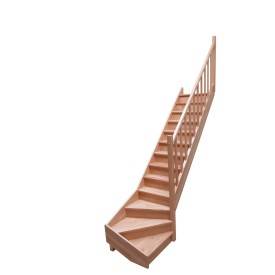
CHEVALARD - Straight staircase Standard range, footprint 259 cm
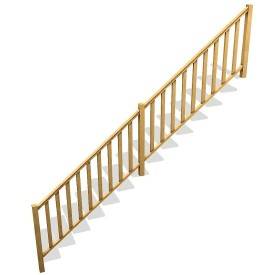
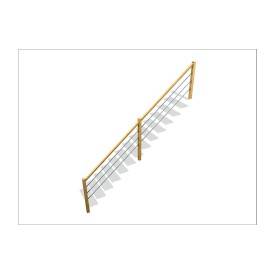
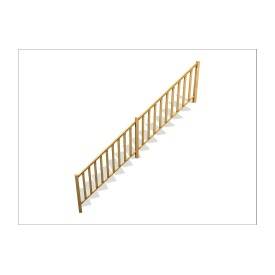
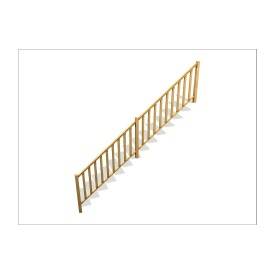
GAVIA wood spindle handrail for straight staircase. Available in fir, beech or oak to suit your budget and desired aesthetic – beech is recommended for its abrasion resistance on the handrail. Traditional straight vertical spindles, designed for the GAVIA WoodUp straight staircase. Raw untreated wood to be varnished (2 coats recommended for the handrail subject to frequent contact) or painted before use. Indoor use only.
The GAVIA handrail is an interior wooden spindle handrail designed for GAVIA staircases. Available in oak, beech or glulam fir, it adds a traditional and warm touch to your interior staircase while ensuring protection in compliance with safety standards.
Compatible with the straight staircase configuration of the GAVIA WoodUp staircase (left or right depending on the configuration). Delivered unfinished and untreated, to be finished before use.
| Feature | Description |
|---|---|
| Available wood species | oak, beech or glulam fir |
| Design | Traditional vertical spindles |
| Configuration | Straight staircase |
| Compatibility | GAVIA WoodUp staircase |
| Finish | Raw wood – to be varnished, painted or oiled |
| Use | Interior |
Install this handrail at the same time as the GAVIA staircase for a cohesive result. First fix the newel posts at the bottom and top, then the bottom rail, the spindles, and finally the handrail. Check the final height of 90 cm (vertical measurement from the nosing).
Apply the finish to all elements before final fixing. The handrail requires an abrasion-resistant finish (2-coat floor varnish recommended). The spacing between spindles must be less than 11 cm (standard NF P01-012).
The wood is delivered raw and untreated. Apply a protective finish before intensive use – satin floor varnish (2 coats), oil-wax or polyurethane varnish depending on the desired look. The handrail, subject to frequent contact, particularly benefits from an abrasion-resistant floor varnish.
Annual maintenance with a product suited to the chosen finish is sufficient to preserve the appearance of the wood. Avoid abrasive products or solvent-based cleaners that degrade finishes.
Fir is the economical option, softer but sufficient for an interior handrail with a protective finish. Beech is the traditional species for handrails: harder, abrasion-resistant, with a fine and regular grain. Oak is the premium choice: maximum lifespan, noble appearance, but higher price. For standard family use, beech offers the best quality/durability/price ratio.
The handrail is sized for the GAVIA WoodUp staircase. Adaptation to other staircases of similar configuration (straight staircase) is possible by checking dimensional compatibility. Contact WoodUp with the precise measurements of your stairwell and staircase before ordering.
Yes, there is no obligation to match the wood species between the staircase and the handrail. Some homeowners choose oak for the handrail on a fir staircase for greater durability on the handrail, or for a contrasting aesthetic effect. Apply the same colour finish for visual harmony.
The handrail is delivered as a kit to be assembled following WoodUp instructions. Assembly requires a drill, wood drill bits, a spirit level and a mallet or hammer. Installation is accessible to a DIYer with basic experience. Allow 2 to 4 hours for installation depending on the configuration.
In France, standard NF P01-012 applies to balustrades. For a private interior staircase, the minimum height is 90 cm from the nosing. The spacing between spindles must prevent the passage of an 11 cm sphere. These are the minimum regulatory requirements for new builds.
No questions yet.