

Your cart
There are no more items in your cart

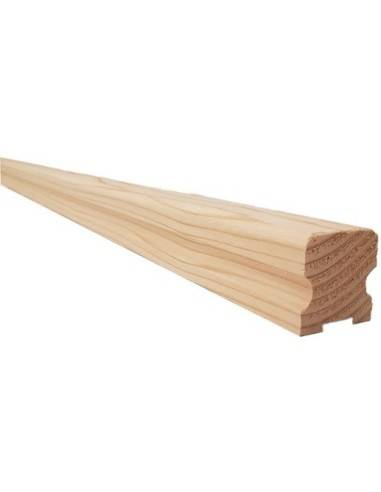
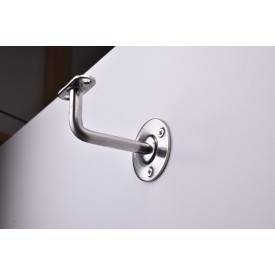
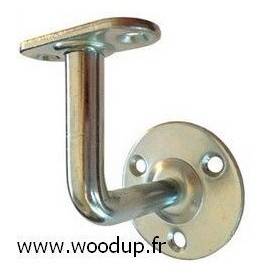
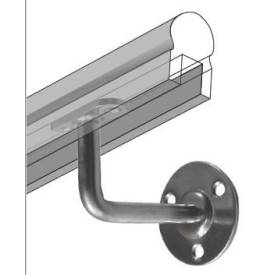
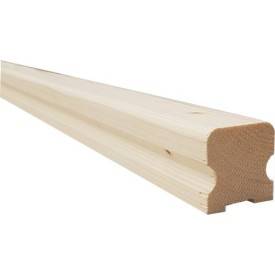
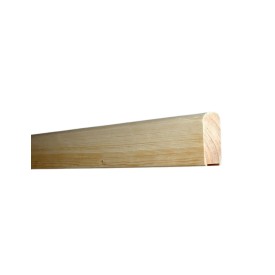
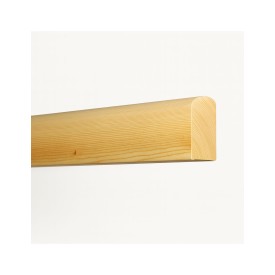
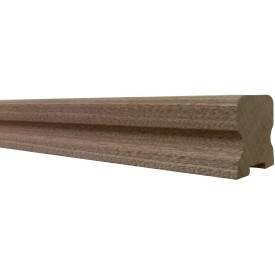
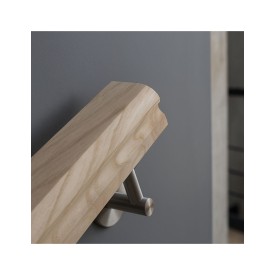
Moulded solid douglas fir 50x50 mm handrail with 21x5 mm groove. Class 3 wood, naturally resistant to moisture — suitable for indoor and sheltered outdoor use. Available in 5 lengths: 100 cm, 150 cm, 195 cm, 250 cm, 300 cm. Supplied raw, can be cut to the desired length. Finish (exterior oil, stain or varnish) recommended for outdoor exposure. Stainless steel fixings required outdoors. Compatible wall brackets for 21x5 mm groove to be ordered separately.
This moulded handrail in solid douglas fir 50x50 mm features a 21x5 mm groove for fixing to standard wall brackets. Douglas fir (Pseudotsuga menziesii) is a softwood of Class 3 without treatment: it naturally resists fungi and wood-boring insects, making it suitable for indoor use as well as sheltered outdoor settings — under a canopy, covered pergola or enclosed gallery. In fully exposed outdoor conditions with direct rainfall, a protective finish is essential.
The moulded 50x50 mm section softens the edges of the square profile and improves grip comfort. Douglas fir has a warm reddish-brown hue with a pronounced grain, enhanced by an oil or transparent stain. Its moderate density (~530 kg/m³) makes it easy to handle and install, while offering sufficient mechanical strength for everyday use on a staircase or balustrade.
Five lengths are available: 100 cm, 150 cm, 195 cm, 250 cm, 300 cm. Brackets and screws must be ordered separately, compatible with the 21x5 mm groove. For outdoor use, opt for stainless steel screws to avoid corrosion marks.
| Characteristic | Description |
|---|---|
| Material | Solid douglas fir (Pseudotsuga menziesii) |
| Section | 50 x 50 mm moulded |
| Groove | 21 x 5 mm — compatible with standard brackets |
| Durability class | Class 3 without treatment — indoor and sheltered outdoor use |
| Density | ~530 kg/m³ |
| Available lengths | 100 cm, 150 cm, 195 cm, 250 cm, 300 cm |
| Brackets and fixings | Not supplied — 21x5 mm groove brackets to be ordered separately (stainless steel recommended for outdoor use) |
| Use | Indoor and sheltered outdoor use — finish required for fully exposed outdoor use |
| Finish | Raw wood — exterior oil, stain or varnish recommended |
Select brackets compatible with the 21x5 mm groove. Position them at regular intervals, with a maximum spacing of 80 cm between two support points. Install the handrail at a height of between 80 and 100 cm from the nosing or finished floor level.
For outdoor use, use minimum A2 stainless steel screws for the brackets and all fixings. Ordinary zinc-plated steel screws corrode on contact with moisture and the acidic tannins in douglas fir, leaving irreversible staining on the wood. Apply the finish preferably before installation. After any cutting, treat the cut ends immediately — these are the areas most exposed to moisture.
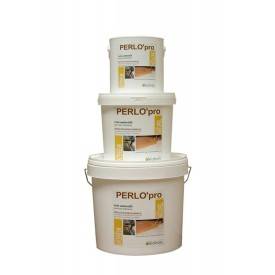
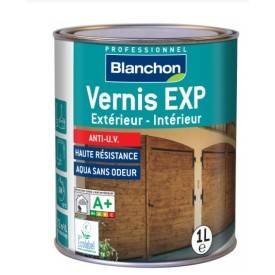
Indoors, a surface finish improves resistance to dirt. In sheltered or semi-exposed outdoor settings, regular protection is essential to limit greying and prevent surface cracking. Recommended options:
Without a finish, douglas fir turns grey within 6 to 12 months — a purely aesthetic phenomenon with no impact on mechanical properties. An annual clean with clear water and a soft brush is sufficient for routine maintenance in a sheltered outdoor setting.
What to know before buying: moulded douglas fir 50x50 mm is compatible with 21x5 mm groove brackets. One of the few handrails suitable for sheltered outdoor use (Class 3) with an appropriate finish. Stainless steel screws for outdoor use. Treat all faces before installation, including inside the groove. Wall fixings not supplied.
Douglas fir is the only moulded timber in the range that can be used in sheltered outdoor settings without preservative treatment. Moulded beech and oak are hardwoods for indoor use only, significantly more resistant to abrasion but sensitive to outdoor moisture. Fir is exclusively an indoor timber. Douglas fir therefore occupies an intermediate position: natural resistance to moisture, but lower density and hardness than hardwoods.
In fully exposed outdoor conditions with direct rainfall, an exterior finish is essential to protect the wood durably. Class 3 douglas fir without a finish holds up well in sheltered outdoor settings (without direct contact with rainwater), but full outdoor exposure accelerates greying and can eventually cause surface cracking. An exterior oil or stain renewed every 1 to 2 years is the most suitable solution.
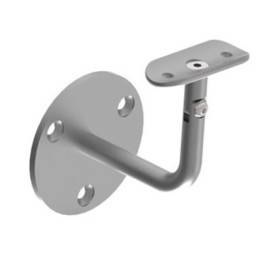
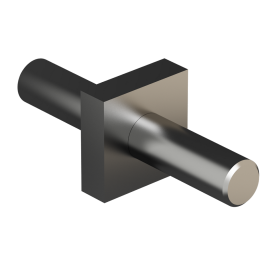
Brackets must be compatible with a groove 21 mm wide and 5 mm deep. For outdoor use, choose stainless steel or hot-dip galvanised steel brackets to avoid corrosion. Lacquered steel brackets are suitable for indoor use only.
Fir is exclusively an indoor timber — without preservative treatment, it deteriorates rapidly outdoors, even under shelter. Class 3 douglas fir naturally resists moisture and wood-boring insects, making it the appropriate choice for any staircase or balustrade in contact with the elements.
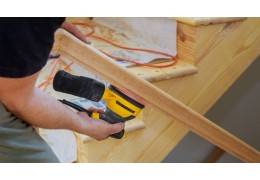
Yes, absolutely. Cut ends are the most permeable areas for moisture — the wood absorbs water far more quickly there than on planed faces. After cutting, sand the end grain to 120 grit and immediately apply a coat of oil or stain, even indoors, to limit the risk of cracking.
Yes. Douglas fir is a relatively soft softwood (~530 kg/m³) that can be cut easily with a circular saw or mitre saw, without any special tooling. Unlike oak or beech, no specific pre-drilling is required for the retaining screw on the brackets — a standard wood screw holds correctly.

No questions yet.
You might also like

Dispatch within 10 days when the product is in stock *.
* Except bespoke products
Dispatched within 6-8 weeks for personalised and made-to-measure products.

Payment in 1 or 3 instalments at no extra cost. Bank transfer, cheque or PayPal

Satisfied or refunded if returned within 14 calendar days (Sundays and public holidays included) following delivery.
No questions yet.