

Your cart
There are no more items in your cart

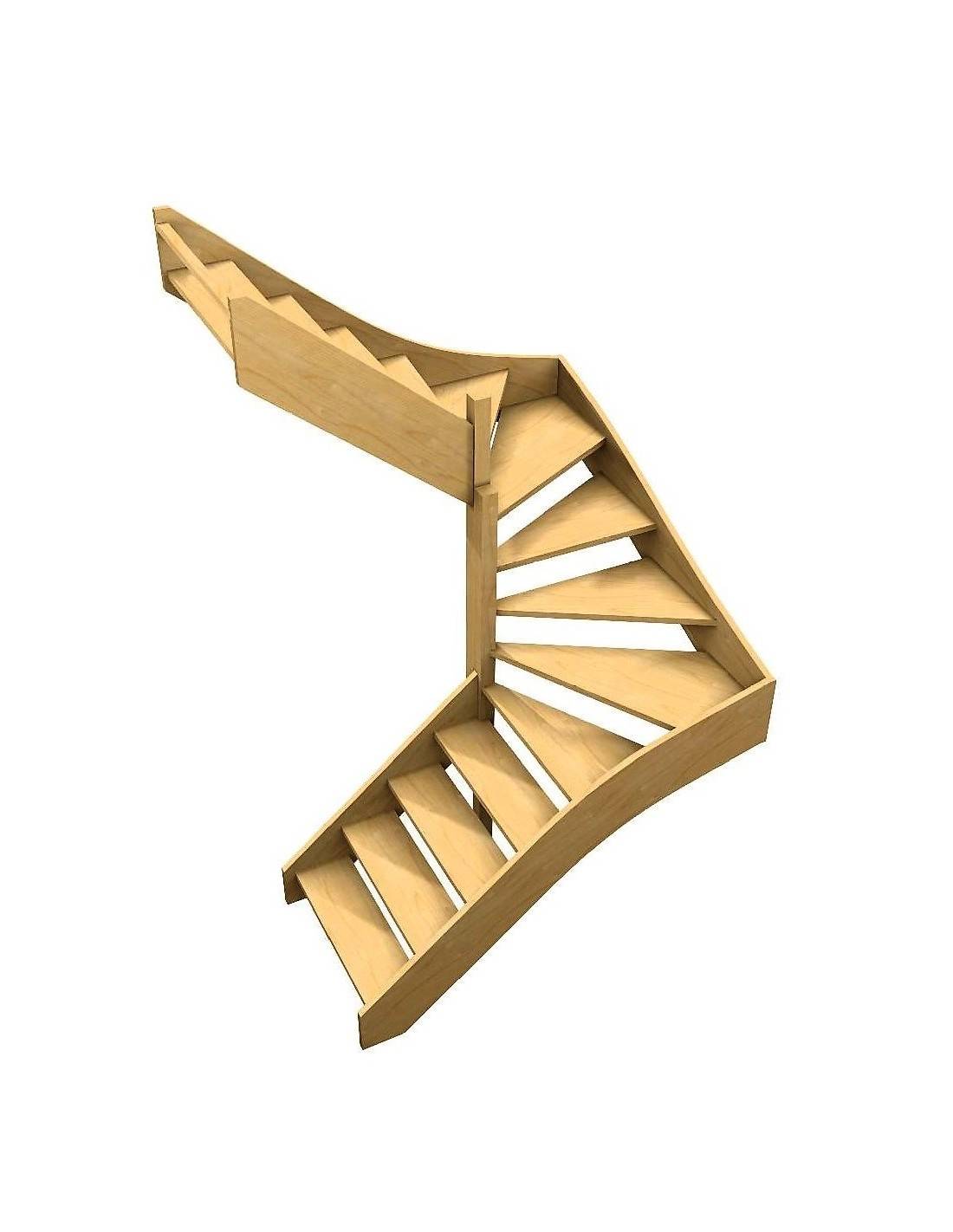
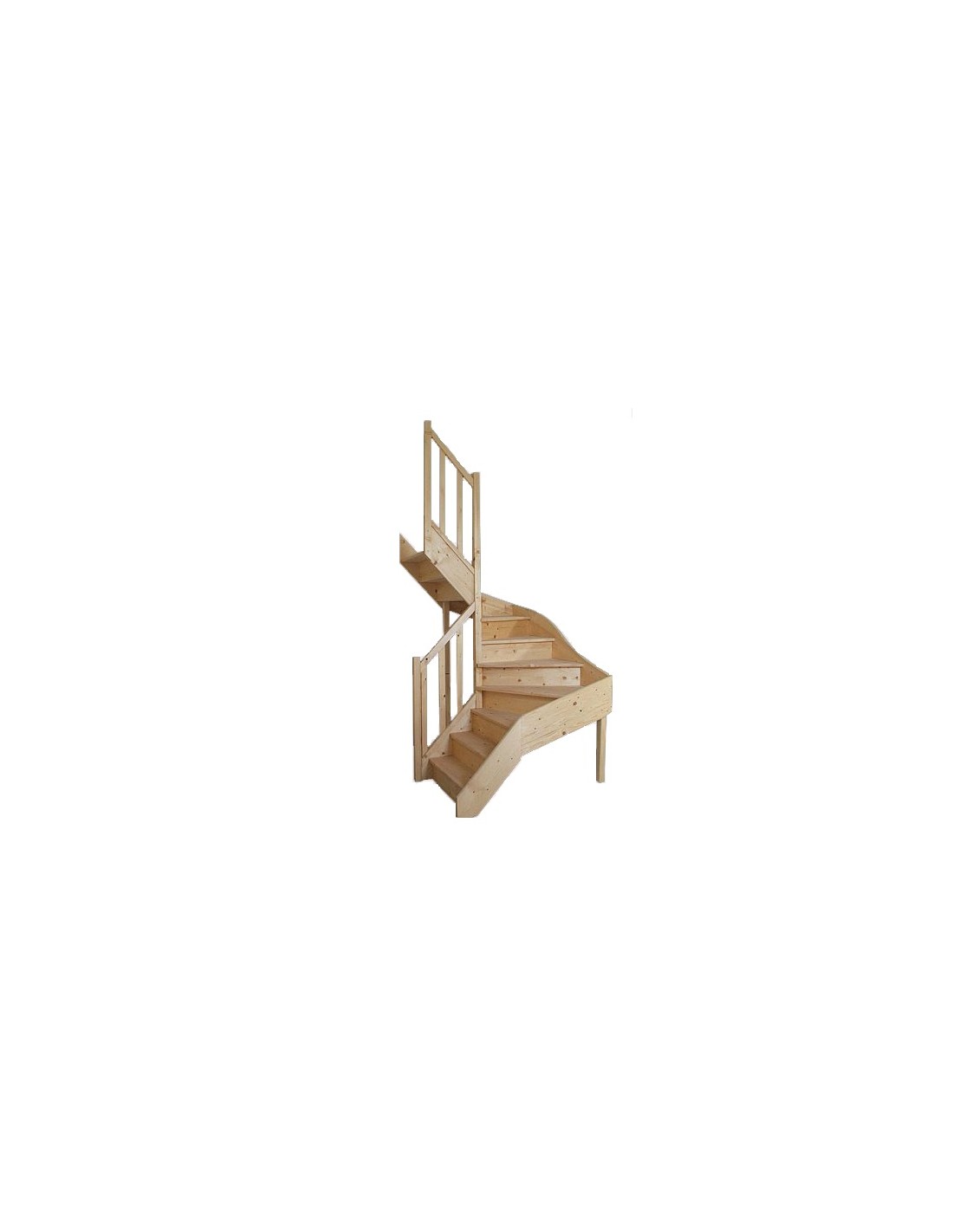
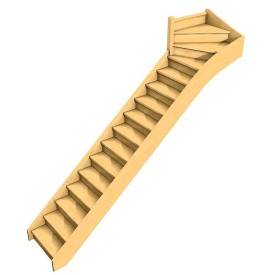
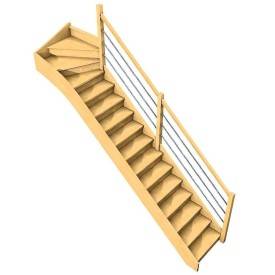
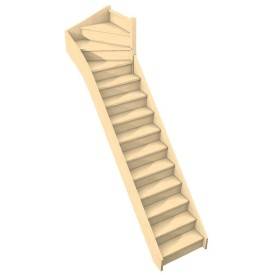
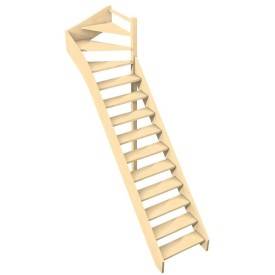
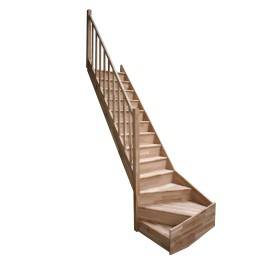
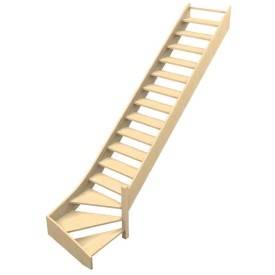
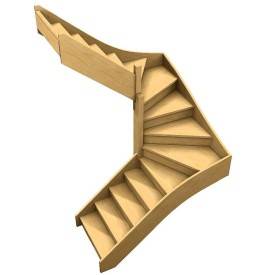
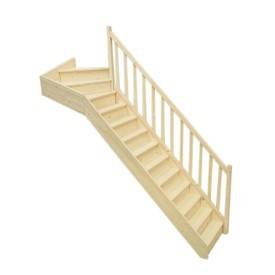
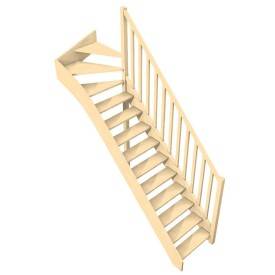
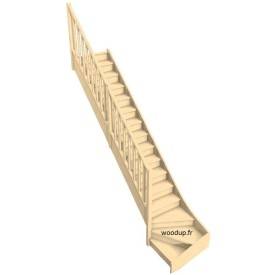
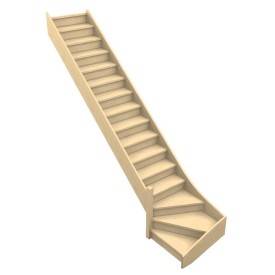
Double quarter-turn fir staircase
With or without risers
One chamfered spindle handrail (interior sides) included
Supplied as a kit
 0
In stock Restocking in progress
0
In stock Made to order
0
In stock Restocking in progress
0
In stock Made to order
Wood section: 220*32 mm
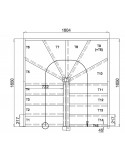
Footprint: 1650*1604*1650 mm
Number of steps: 14 + 1 half
Floor-to-floor height: 2m85
Double quarter-turn staircase GOULES 160x160 in solid fir — height 285 cm. 14 treads + landing nosing, width 80 cm, riser height 19 cm, going 21 cm, opening 160x160 cm, footprint 165x160.4x165 cm. Supplied without handrail. Fixings and instructions included. Untreated raw solid fir — finishing required before installation. 160x160 cm opening more compact than the GOULES 180x180 (ID 277). Interior use only. Compatible with PUECH and TRELIS handrails — check compatibility before ordering.
The GOULES 160x160 staircase is a double quarter-turn staircase in solid fir, sold without handrail, designed for a square stairwell opening of 160x160 cm. Intended for a floor-to-floor height of 285 cm with 14 treads + 1 landing nosing (15 total risers), it offers a width of 80 cm, a riser height of 19 cm and a going of 21 cm. The total footprint is 165x160.4x165 cm (W x D x H).
The GOULES 160x160 is the economical fir version of the ROCLES 160x160 (beech/oak). It shares the same dimensions as the ROCLES 160x160 - same stairwell opening, same footprint, same treads. The handrail is to be ordered separately. Available with or without risers, in right or left direction.
| Characteristic | Description |
|---|---|
| Type | Double quarter-turn, interior, kit, without handrail |
| Wood species | Untreated solid fir |
| Floor-to-floor height | 285 cm (can be cut down) |
| Number of treads | 14 treads + 1 landing nosing (15 risers) |
| Riser height | 19 cm |
| Going | 21 cm |
| Width | 80 cm |
| Tread section | 220x30 mm |
| Total dimensions | 165x160.4x165 cm (W x D x H) |
| Recommended stairwell opening | 160x160 cm |
| Risers | With or without, as preferred |
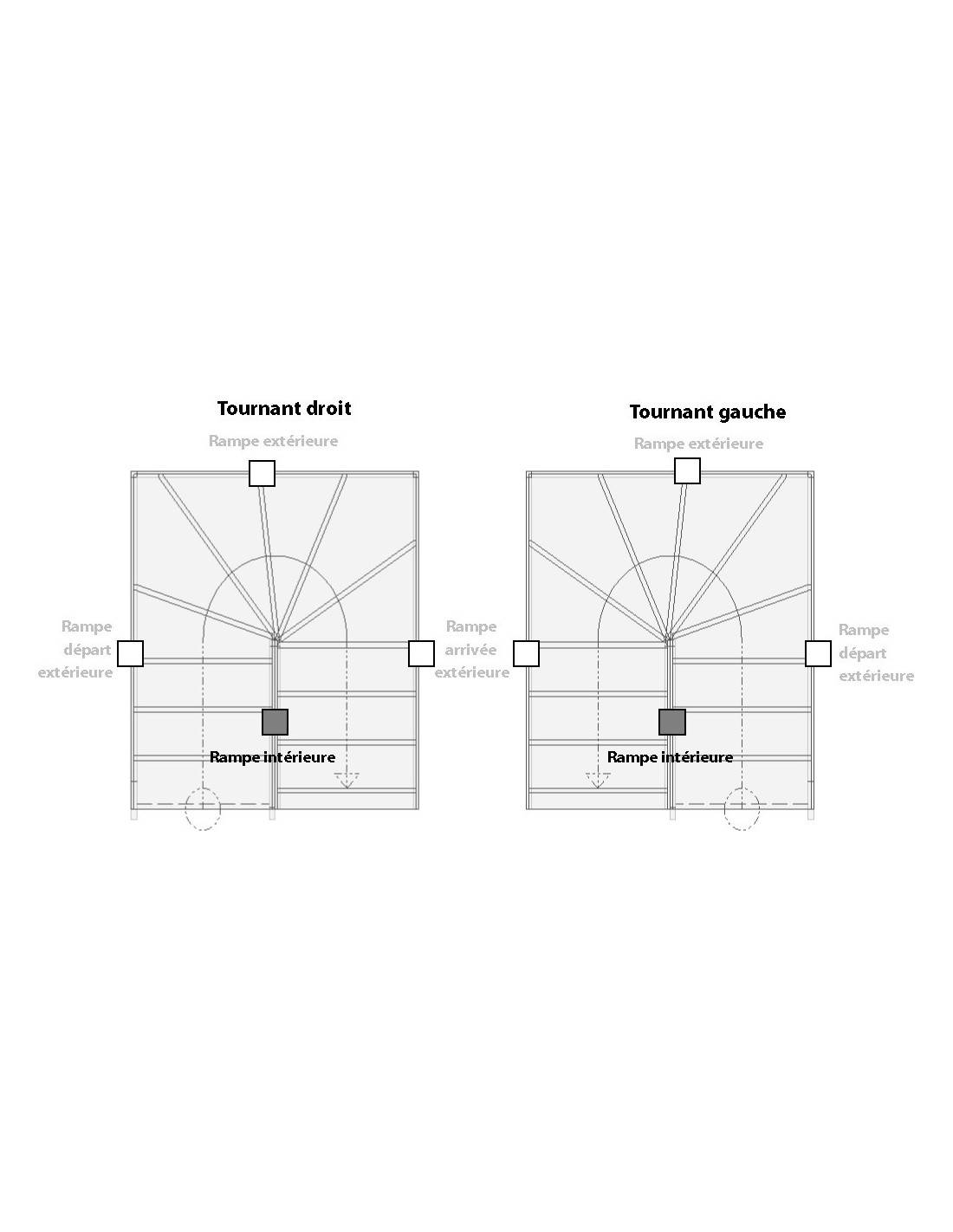
| Direction | Right or left - non-reversible, to be specified at the time of ordering |
| Handrail | Not included - non-reversible, to be ordered and fitted during assembly |
| Finish | Untreated fir - finishing required before use |
| Use | Interior use only |
With risers (5 packages):
Without risers (4 packages):
Check that the stairwell opening is square at 160x160 cm minimum on finished dimensions. The total footprint of 165x160.4 cm slightly exceeds the stairwell opening - the additional 5 cm in length and 0.4 cm in depth correspond to the natural overhang of the structure. Determine the direction before ordering - final decision. The handrail must be fitted during assembly if desired. Fir is easier to screw than beech or oak - pre-drilling is still recommended to avoid splitting.
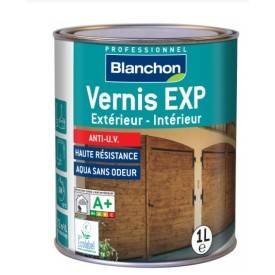
Untreated fir is susceptible to stains and moisture without protection. Apply a 2-coat varnish before first use. On a fir DQT, the turning treads (balanced) are more exposed - apply an extra coat in these areas. Renew every 5-7 years. Cleaning: damp cloth, neutral pH.
The GOULES 160x160 is the most economical DQT solution in the range for a 160x160 cm stairwell opening. Compared to the ROCLES 160x160 in beech/oak, fir is less durable in the long term but perfectly suited to standard family use with careful finishing. The price difference between fir and beech on a DQT can be significant - if the budget is tight but you want a DQT, the GOULES 160x160 is the right option.
Important before purchasing: this model is sold without handrail. The handrail must be ordered separately and fitted during assembly. The footprint of 165x160.4 cm is slightly larger than the 160x160 cm stairwell opening - the additional 5 cm in width and 0.4 cm in depth correspond to the staircase structure which overhangs slightly beyond the stairwell opening.
The GOULES 160x160 is in fir - less expensive, more accessible finishing. The ROCLES 160x160 is in beech or glued laminated oak - more durable and aesthetically refined. Both have exactly the same dimensions (160x160 cm stairwell opening, 165x160.4 cm footprint, 14 treads + landing nosing, riser height 19 cm, going 21 cm) and are sold without handrail.
Yes. For 264 cm, adaptation is possible by removing one tread (riser height approximately 19 cm) then cutting the stringers down slightly by 2 cm to adjust. This modification reduces the initial footprint by approximately one going (21 cm). The intermediate quarter-turn modules and the top landing do not change - they are fixed in the design.
A 160x160 cm stairwell opening in a concrete slab requires the involvement of a professional. You must check for the presence of reinforcement (rebar) in the cutting area and plan for adequate load redistribution. In a timber floor, the creation is more accessible but still requires consolidation of the trimmer joists. Allow a budget of 500 to 1,500 euros for stairwell opening work depending on the type of structure.
For a heavily used fir DQT, aqua-polyurethane varnish in 3 coats is the best protection. The balanced turning treads are subject to asymmetric wear - reinforce the finish on these areas. Apply a first coat of fir-specific pore-filler primer to prevent excessive absorption of the varnish. Renew every 4-5 years on the turning treads.
No. A minimum of two people is required. The fir stringers, although lighter than beech or oak, are long and cumbersome. The quarter-turn module must be held in place while the stringers are fixed - this operation requires two pairs of hands. Allow a full day for two people with intermediate DIY experience.
On a DQT, the going is calculated according to the geometric configuration of the two turns and the available space. With a 160x160 cm stairwell opening and 14 treads, the formula gives a going of 21 cm - greater than the Standard (19 cm) because the DQT configuration allows a different distribution of heights and depths between the straight flights and the turning modules.
ROCLES 160x160 - Double QT beech oak, same stairwell opening, more durable
GOULES 180x180 - Double QT fir, 180x180 cm stairwell opening
ALBULA - Double QT Comfort range, 164x175 cm stairwell opening
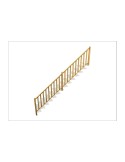
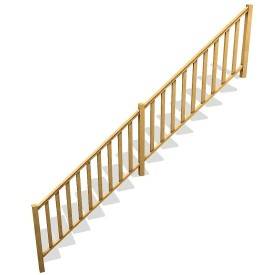
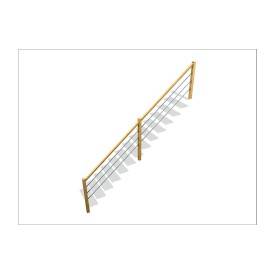
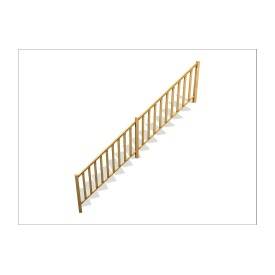
Indoor wood spindle handrail for ROCLES or GOULES double quarter turn staircase. Available in oak, beech or glued laminated fir depending on budget and desired aesthetics. Designed for simultaneous installation with ROCLES and GOULES double quarter turn WoodUp staircases, compatible with left or right configuration depending on the staircase orientation. Raw untreated wood, to be varnished or painted before use, indoor use only.
The ROCLES/GOULES handrail is an interior handrail with wooden spindles designed for ROCLES or GOULES staircases. Available in oak, beech or fir glulam, it brings a traditional and warm touch to your interior staircase whilst providing protection in compliance with safety standards.
Compatible with the double quarter-turn configuration of the ROCLES or GOULES WoodUp staircase (left or right depending on configuration). Supplied raw untreated, to be finished before use.
| Feature | Description |
|---|---|
| Available wood species | oak, beech or fir glulam |
| Design | Traditional vertical spindles |
| Configuration | Double quarter-turn |
| Compatibility | ROCLES or GOULES WoodUp staircase |
| Finish | Raw wood - to be varnished, painted or oiled |
| Use | Interior |
Install this handrail simultaneously with the ROCLES or GOULES staircase for a consistent result. First fix the start and end newel posts, then the bottom rail, the spindles and finally the handrail. Check the final height of 90 cm (vertical measurement from the nosing).
Apply the finish to all elements before final fixing. The handrail requires an abrasion-resistant finish (2 coats of varnish recommended). The spacing between the spindles must be less than 11 cm (standard NF P01-012).
The wood is supplied raw untreated. Apply a protective finish before heavy use - satin varnish (2 coats), oil-wax or polyurethane varnish depending on the desired appearance. The handrail, subject to frequent contact, particularly benefits from an abrasion-resistant varnish.
Annual maintenance with a product suited to the chosen finish is sufficient to preserve the appearance of the wood. Avoid abrasive products or solvent-based cleaners that degrade finishes.
Fir is the economical option, softer but sufficient for an interior handrail with a protective finish. Beech is the traditional species for handrails: harder, abrasion-resistant, fine and regular grain. Oak is the premium choice: maximum lifespan, noble appearance, but higher price. For standard family use, beech offers the best quality/durability/price ratio.
The handrail is sized for the ROCLES or GOULES WoodUp staircase. Adaptation to other staircases of similar configuration (double quarter-turn) is possible by checking dimensional compatibility. Contact WoodUp with the precise measurements of your stairwell and staircase before ordering.
Yes, there is no obligation to match the wood species between the staircase and the handrail. Some homeowners choose oak for the handrail on a fir staircase for greater durability on the handrail, or for a contrasting aesthetic effect. Apply the same colour finish for visual harmony.
The handrail is supplied as a kit to be assembled according to WoodUp instructions. Assembly requires a drill, wood drill bits, a level and a mallet or hammer. Installation is accessible to a DIYer with basic experience. Allow 2 to 4 hours for installation depending on the configuration.
In France, standard NF P01-012 applies to balustrades. For a private interior staircase, the minimum height is 90 cm from the nosing. The spacing between spindles must prevent the passage of an 11 cm sphere. These requirements are the minimum regulatory standards for new builds.
No questions yet.