

Your cart
There are no more items in your cart

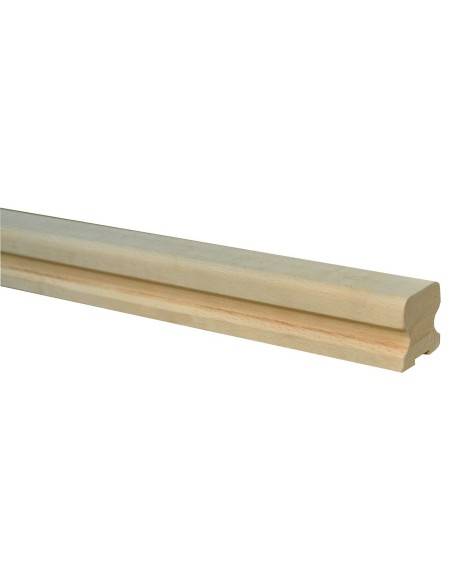
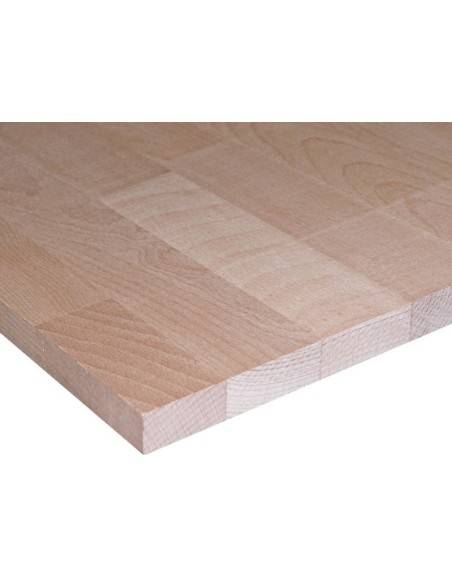
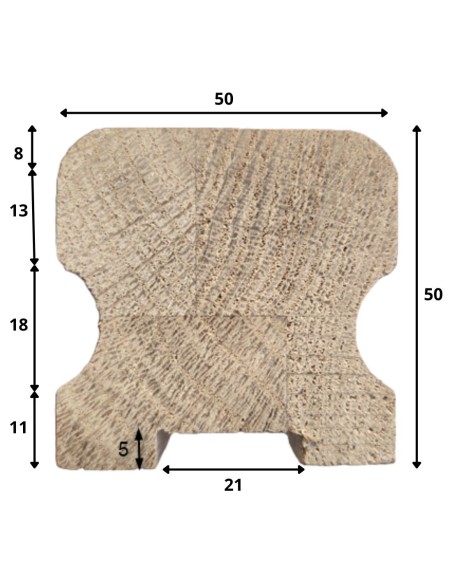
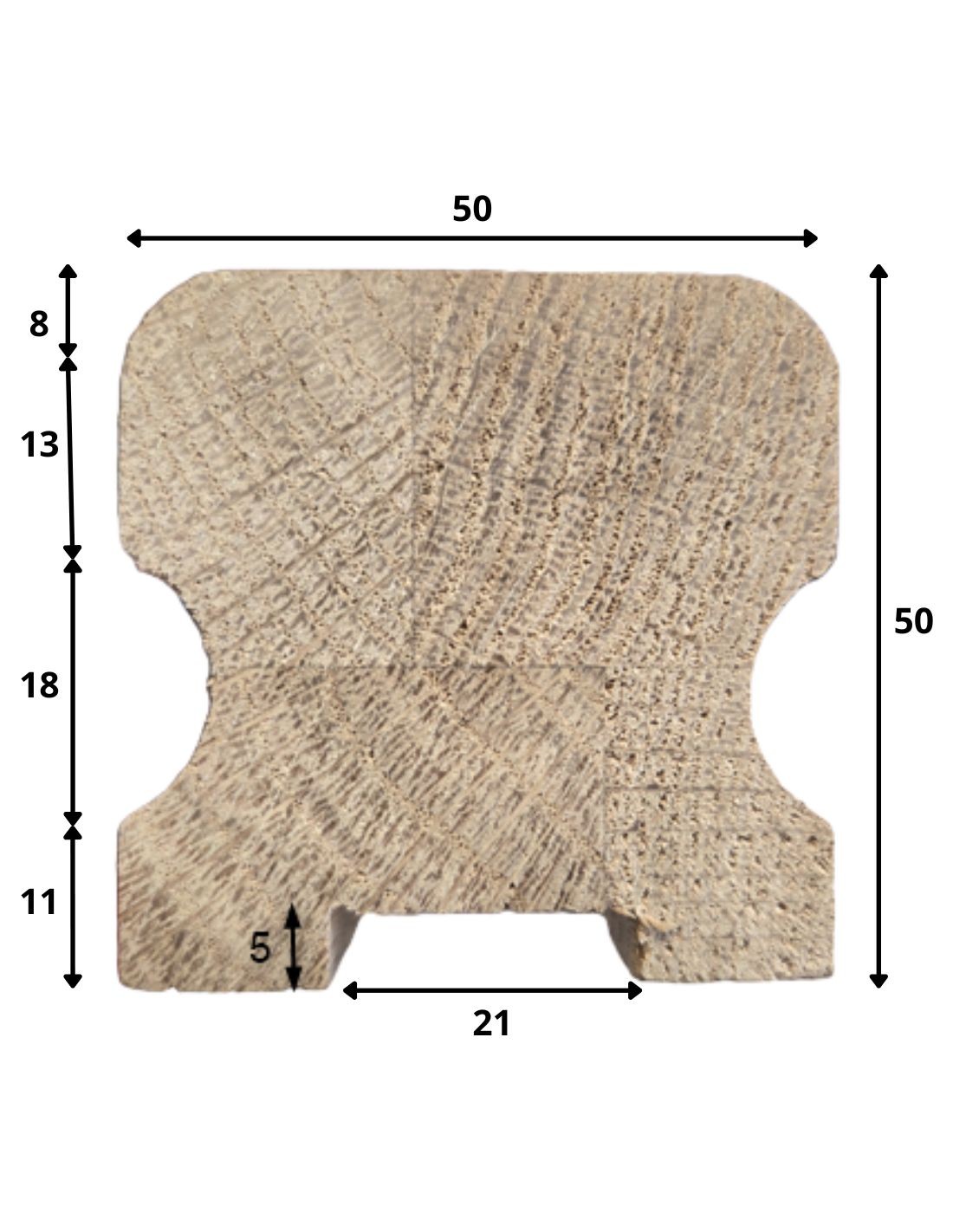
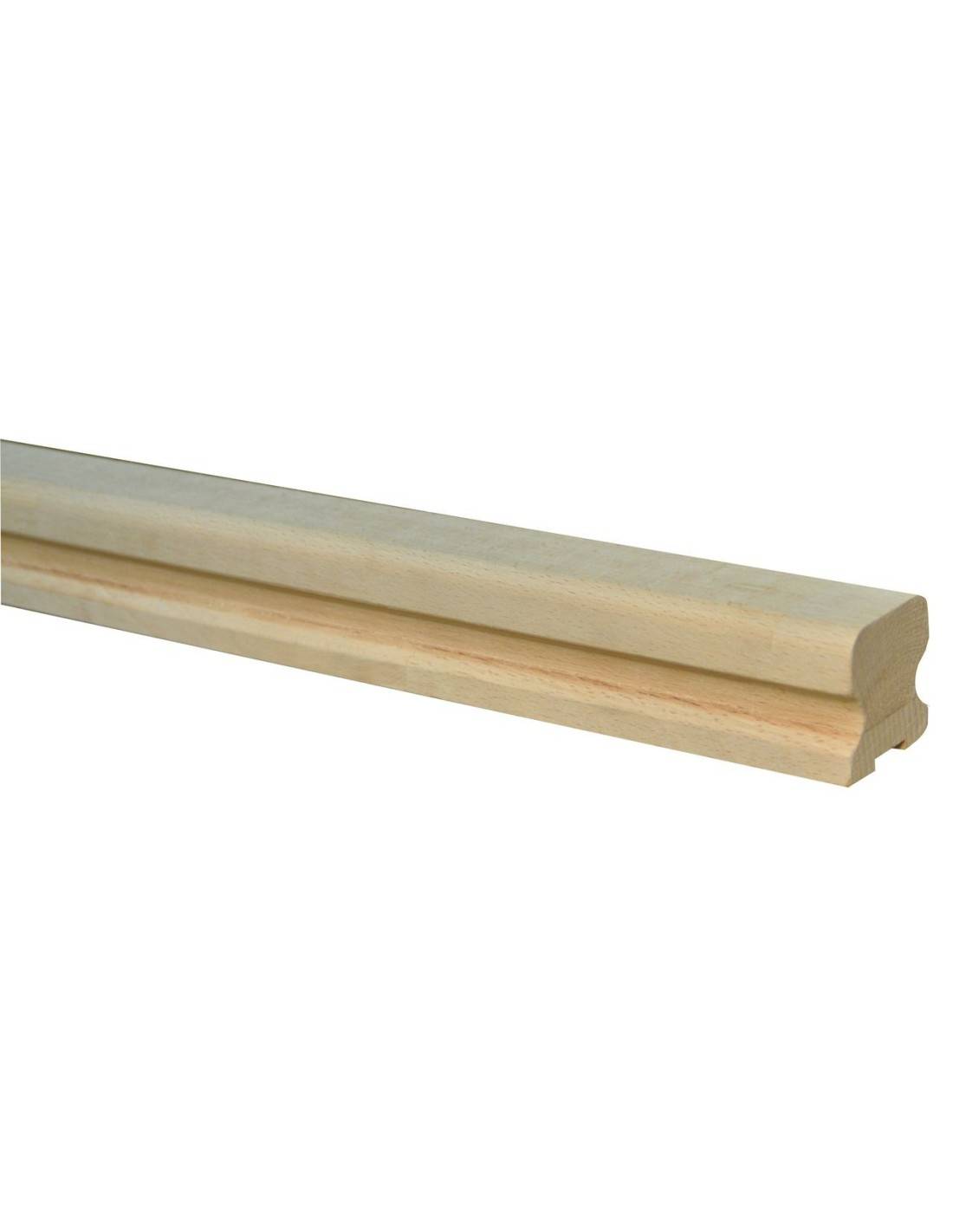
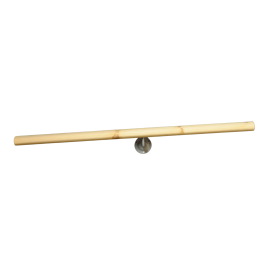
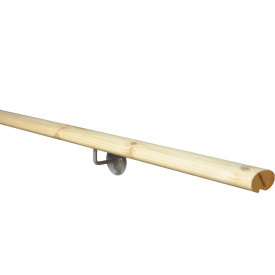
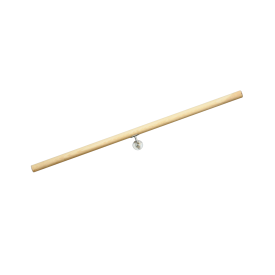
Solid laminated beech handrail, 50x50 mm, with a moulded profile and 21x5 mm groove. Hard wood (~720 kg/m³), resistant to everyday abrasion and suitable for regularly used stairs. Available in 3 lengths: 195, 250 and 295 cm . Supplied unfinished; varnish, oil or seal before use. For indoor use only. Compatible wall brackets and fixings for the 21x5 mm groove sold separately. Drill pilot holes before fitting screws into beech.
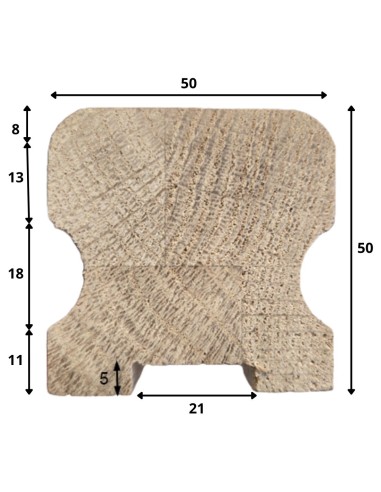
This solid laminated beech handrail has a 50x50 mm moulded profile and a 21x5 mm groove for mounting on standard wall brackets. Beech is a dense hardwood (~720 kg/m³), much more resistant to abrasion than fir or pine. It is suitable for staircases used regularly every day.
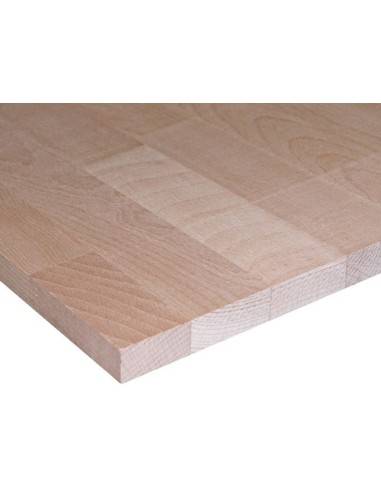
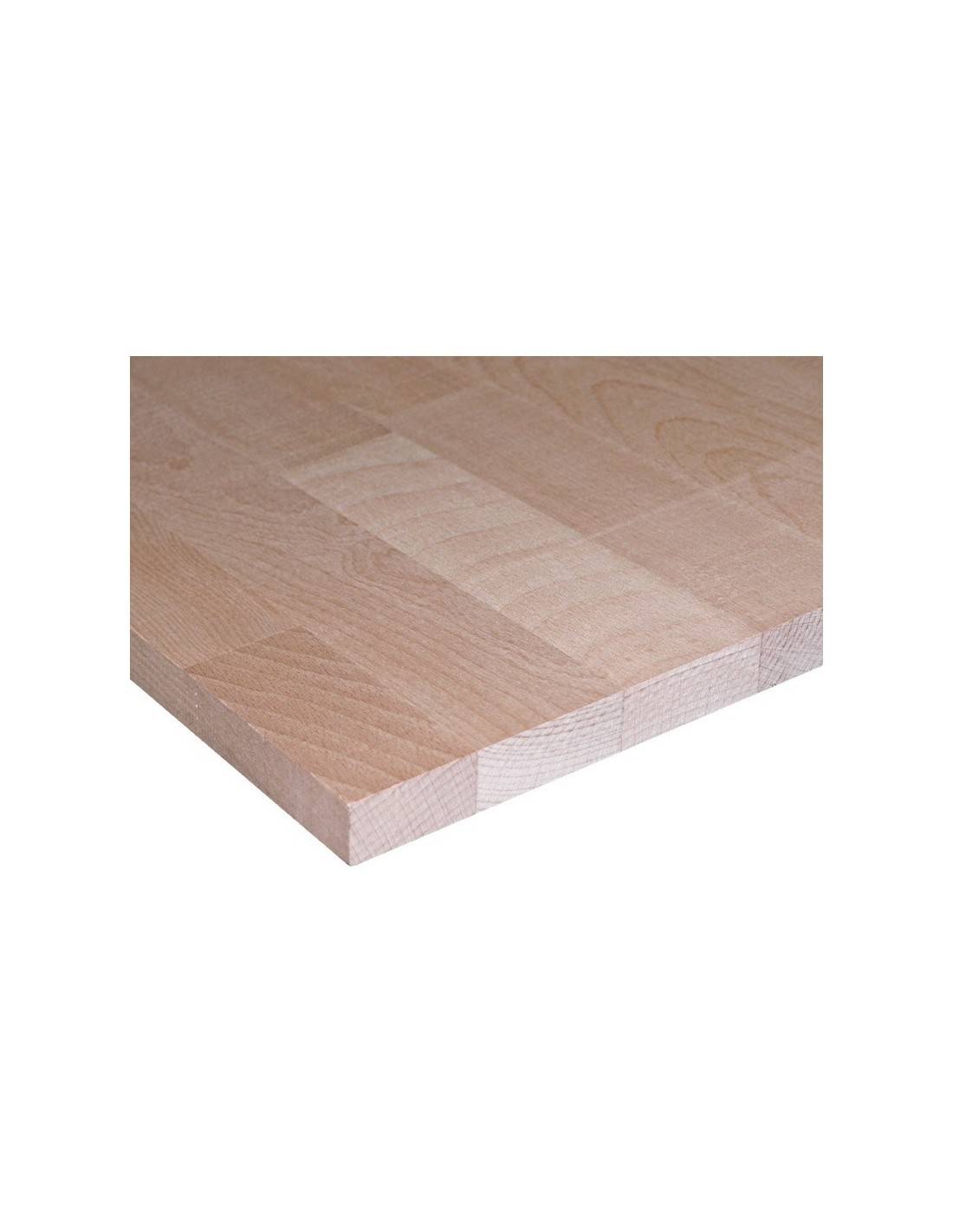
Laminated timber offers better dimensional stability than sawn solid timber: the strips are glued together in opposing directions, limiting wood movement caused by changes in ambient humidity. This stability is particularly valuable for a handrail, which is exposed to seasonal changes in temperature and humidity. For indoor use only: untreated laminated beech warps quickly outdoors.
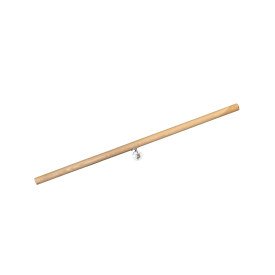
Three lengths are available: 195, 250 and 295 cm. The handrail is supplied unfinished and must be treated before use. A surface finish is essential to protect the wood and make everyday care easier. Wall brackets and screws must be purchased separately and must be compatible with the 21x5 mm groove.
| Specification | Description |
|---|---|
| Material | Solid laminated beech |
| Profile size | 50 x 50 mm moulded profile |
| Groove | 21 x 5 mm – compatible with standard brackets |
| Available lengths | 195 cm, 250 cm, 295 cm |
| Density | ~720 kg/m³ – hardwood, resistant to abrasion |
| Brackets and screws | Not supplied – order separately |
| Use | Indoor use only |
| Finish | Unfinished wood – apply varnish, oil or a hard-wearing sealant before use |
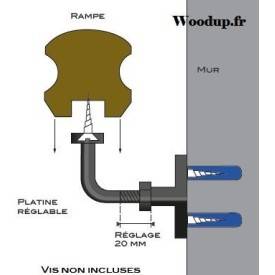
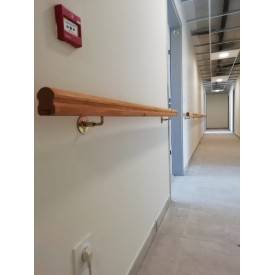
Choose brackets compatible with the 21x5 mm groove before purchasing. Position them at regular intervals, with a maximum spacing of 80 cm between support points. Install the handrail 80 to 100 cm above the stair nosings or finished floor.
Beech is a hardwood that must always be pre-drilled before screws are inserted to prevent splitting. Use a drill bit slightly smaller in diameter than the screw. Tighten without excessive force: the hardwood holds screws securely without high torque. Ideally, apply the finish before installation, while every side is still accessible.
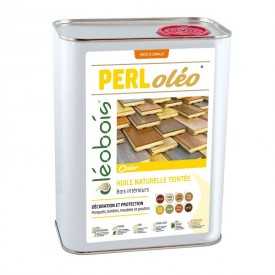
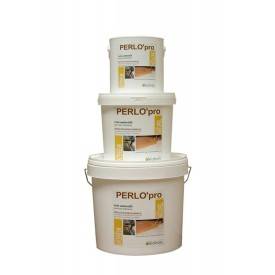
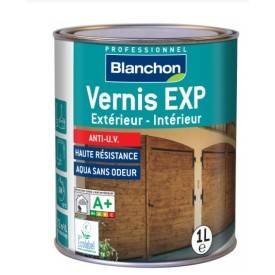
The unfinished laminated beech must be treated before use. Recommended finishes depend on how it will be used:
For routine care, a slightly damp cloth is enough. Avoid abrasive or acidic household cleaners. On a varnished or hard-wearing sealed finish, light sanding followed by a fresh coat can refresh the surface after several years of heavy use.
Before you buy: solid beech is a hard, dense wood, so pre-drilling is essential before inserting screws to prevent splitting. Treat every side before installation; a hard-wearing stair sealant is recommended. Compatible with WoodUp brackets for a 21x5 mm groove. Wall-mounting fixings are not supplied. Indoor use only: beech is unsuitable for outdoor use.
Beech (~720 kg/m³) is much more resistant to everyday abrasion than fir (~450 kg/m³). On a staircase used several times a day, beech marks much less easily. As laminated timber, it is also more dimensionally stable. On the other hand, it is heavier and must be pre-drilled before screws are inserted. Fir remains suitable for less frequently used staircases or projects on a tight budget.
Laminated timber is made by gluing strips of beech together in alternating directions. This construction limits wood movement caused by changes in temperature and ambient humidity, which is common with sawn solid timber. The result is a piece that remains more stable over time and is less prone to cracking or warping – a useful quality for a permanently installed handrail.
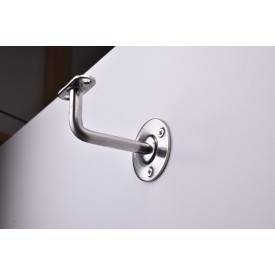
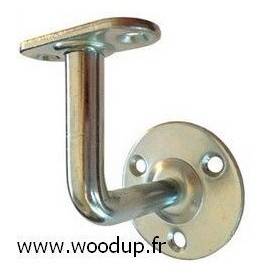
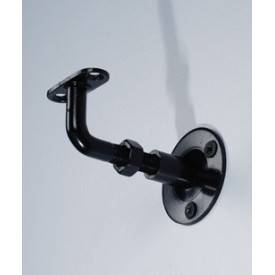
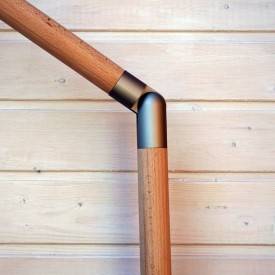
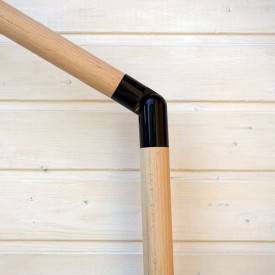
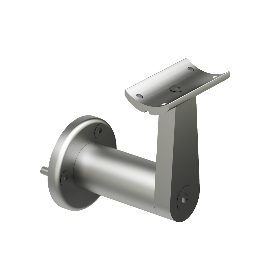
Brackets must be designed for a groove 21 mm wide and 5 mm deep. Woodup offers compatible brackets in black-painted steel and with a bichromated finish, sold separately. Allow one bracket every 60 to 80 cm for secure fixing.
For a staircase used daily, a hard-wearing sealant is the most suitable finish: it forms a tough surface film that withstands repeated rubbing. Apply 2 to 3 coats, sanding lightly between coats with 180-grit paper. Oil-wax gives a more natural look but needs reapplying more often, every 1 to 2 years. Avoid opaque paints on beech, whose pale natural grain deserves to remain visible.
Yes, but as beech is a hardwood, use a fine-toothed circular saw blade with at least 40 teeth. Mark a square cut beforehand to ensure a right angle. After cutting, sand the end with 120-grit paper before applying finish to the cut surface: unprotected bare wood quickly absorbs moisture from the air.
This handrail is sized for residential use. Specific regulatory requirements for height, continuity and mechanical strength apply to premises open to the public. We recommend consulting a structural engineer or architect before installing it in a professional setting or premises open to the public.

No questions yet.
You might also like

Dispatch within 10 days when the product is in stock *.
* Except bespoke products
Dispatched within 6-8 weeks for personalised and made-to-measure products.

Payment in 1 or 3 instalments at no extra cost. Bank transfer, cheque or PayPal

Satisfied or refunded if returned within 14 calendar days (Sundays and public holidays included) following delivery.
No questions yet.