

Your cart
There are no more items in your cart

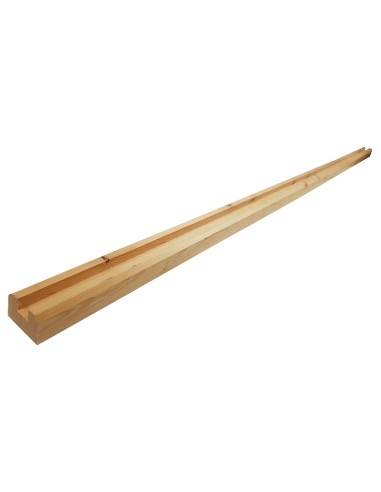
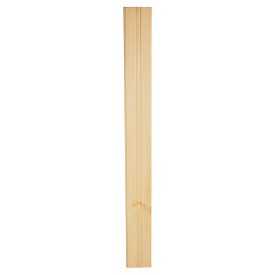
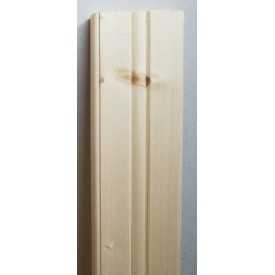
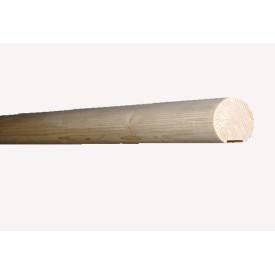
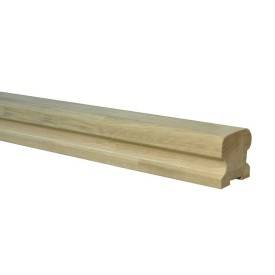
Solid wood bottom rail for a balustrade – 50x30 mm cross-section, 18x15 mm groove for fitting spindles or boards. Pine, fir, beech or Douglas fir. Available in 100, 150 or 200 cm lengths. Unfinished and untreated; paint, oil or stain to suit your preferred finish. Compatible with 50x18 mm straight spindles and 42x42 mm turned balusters from the WoodUp range. Gap between elements ≤ 11 cm (NF P01-012 standard). Sold individually. Beech and fir: indoor use. Douglas fir in 150 and 200 cm lengths: sheltered outdoor use possible.
The solid wood bottom rail is the lower horizontal part of a balustrade, on which the balusters rest and are fixed. It forms the structural connection between the posts and the infill elements, directly affecting the strength of the assembly. This model is designed exclusively for indoor use – landing balustrades, walkways and mezzanines – and is unsuitable for outdoor installation without appropriate additional protection. A balustrade is also known as a guardrail.
Available in four wood species (pine, fir, beech and Douglas fir) and three lengths (100, 150 or 200 cm), it forms part of a balustrade system assembled piece by piece. Its 50x30 mm cross-section and precisely sized groove, 18 mm wide x 15 mm deep, accommodate balusters with matching tenons. The piece is supplied unfinished and untreated: a finish (oil, wood stain or paint) is needed before or after assembly.
Each wood species has distinct technical and visual characteristics. Your choice depends on both the intended use and the look you want – details for each species are in the table below.
| Specification | Description |
|---|---|
| Available wood species | Pine, fir, beech, Douglas fir |
| Available lengths | 100 cm / 150 cm / 200 cm |
| Cross-section | 50 x 30 mm |
| Groove | 18 mm (width) x 15 mm (depth) |
| Finish on delivery | Unfinished and untreated – ready to paint, oil or stain |
| Use | Indoor use only (landing balustrades, mezzanines) |
| Baluster compatibility | Tenoned balusters compatible with an 18x15 mm groove |
| Characteristics by wood species – Pine | Light-coloured softwood with visible knots and a warm tone. Easy to work and treat. |
| Characteristics by wood species – Fir | White to slightly pinkish wood with a fine grain. Economical and compatible with all common finishes. |
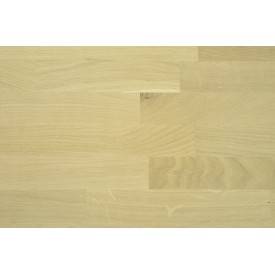
| Characteristics by wood species – Beech | Close-grained hardwood with an even pinkish tone. Greater hardness and a refined look after finishing. |
| Characteristics by wood species – Douglas fir | Softwood with pronounced grain and a golden to orange tone. Naturally resistant to fungi (untreated class 3). |
✓ Structural component: connects the posts and balusters and determines the balustrade’s rigidity
✓ Precisely sized 18x15 mm groove: compatible with tenoned balusters from the Woodup range (straight boards and turned balusters)
✓ Choice of four wood species: from economical fir to denser beech, depending on your budget and preferred appearance
✓ Three lengths available: 100, 150 or 200 cm – cut to suit the actual spacing between your posts
✓ Supplied unfinished: compatible with all finishes (oil, tinted wood stain, paint and clear floor varnish)
✓ Indoor use only: suitable for landing balustrades, mezzanines and walkways in dry environments
Preparation. Measure the exact distance between your posts before choosing a length. The bottom rail fits between the posts, at floor level. Check that the supporting surface is level and stable. Have a wood saw ready to adjust the length.
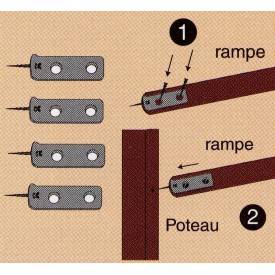
Fixing. Screw the bottom rail into the posts using wood screws suited to the chosen species. For dense beech, pre-drilling is recommended to prevent splitting and make driving the screws easier. Outdoors or in damp environments, choose A2 or A4 stainless steel screws to avoid corrosion.
Finishing. Apply your chosen protection before final assembly for an even finish on every surface, or after assembly for finishes applied in one go. Beech and fir absorb wood stains and oils well. Naturally durable Douglas fir can be left unfinished in dry indoor settings, but a finishing oil improves its longevity.
Indoors, the bottom rail is not exposed to outdoor weather. Regular wiping with a damp, soft cloth is all the maintenance it needs. Avoid abrasive products or high-pH cleaners, which may damage the finish.
Initial finishing recommended: the piece is supplied unfinished. Protection before use is strongly advised to reduce marking and make maintenance easier. Options depend on the look you want:
Before you buy: the bottom rail receives the balusters or spindles in its groove, determining the spacing and how securely the infill is held. Check that your spindles’ 18 mm thickness is compatible with this model’s 18x15 mm groove before ordering. Order the next available length above your span and cut it to size: a bottom rail is easier to shorten than extend. Apply the finish before installation, including inside the groove, for even protection.
Screw the bottom rail into the posts with wood screws, perpendicular to the face of each post. Always pre-drill to prevent splitting, particularly with beech. For a mortise-and-tenon assembly, first insert the balusters into the bottom rail groove before fitting the assembly between the posts. Use stainless steel screws with beech to avoid tannin reactions.
It is compatible with balusters that have a tenon no more than 18 mm wide and 15 mm high, such as straight boards and turned balusters from the Woodup range. Check the tenon dimensions before ordering if you are using balusters from another supplier. Balusters without tenons are fixed differently, using angled screws or brackets.
The choice mainly depends on appearance and budget. Fir is the most affordable option and is easy to paint or stain. Pine has a more pronounced grain, suited to a natural or Scandinavian style. Beech is denser and gives a refined result after finishing, making it a good choice for a prominent balustrade. Douglas fir has a pronounced grain and warm colour, with slightly greater natural durability than the other species offered.
This bottom rail is primarily designed for indoor use. Its groove, which holds the balusters, can retain water if directly exposed to the weather, potentially leading to trapped moisture and wood distortion.
For an outdoor balustrade, it is generally better to use a horizontal crosspiece screwed to the back of the spindles rather than a grooved rail. This reduces water pooling and allows the structure to dry more quickly.
A suitable wooden crosspiece can be used instead, such as a 92x21 mm section in an outdoor-suitable wood species (Douglas fir or class 3 durable wood).
Both approaches are possible. Treating before assembly lets you cover every surface, including those that will be inaccessible afterwards (the bottom of the groove and concealed faces). Treating after assembly works for quick finishes (paint or opaque wood stain) brushed onto the entire balustrade in one session. In either case, apply at least one protective coat to the joints.
Measure the clear distance between the inner faces of your posts. Choose the next available length above that measurement (100, 150 or 200 cm) and cut it to size. Avoid joining two rails end to end across one opening: use a single piece to maintain the rigidity of the assembly.
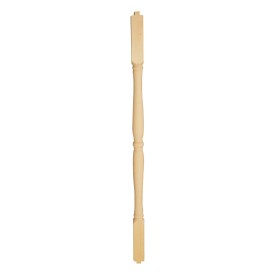
Straight board in Douglas fir, pine, fir or beech
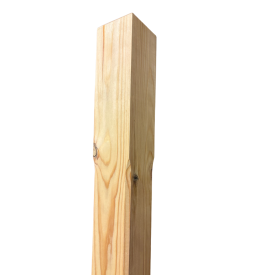
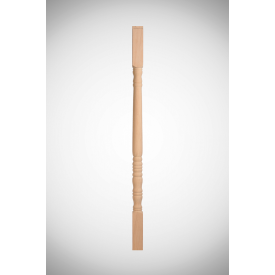
Straight solid wood post for a balustrade

No questions yet.
You might also like

Dispatch within 10 days when the product is in stock *.
* Except bespoke products
Dispatched within 6-8 weeks for personalised and made-to-measure products.

Payment in 1 or 3 instalments at no extra cost. Bank transfer, cheque or PayPal

Satisfied or refunded if returned within 14 calendar days (Sundays and public holidays included) following delivery.
No questions yet.