

Your cart
There are no more items in your cart


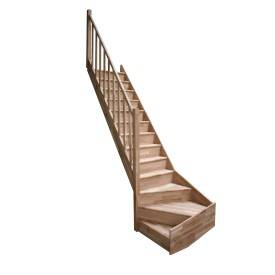
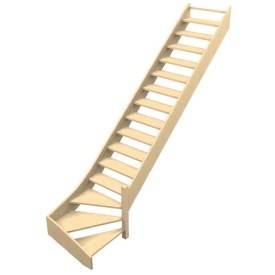
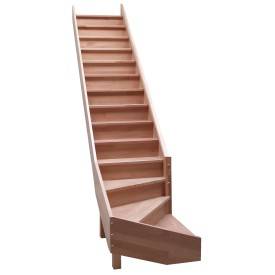
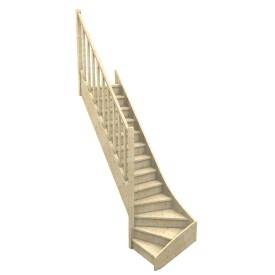
FONTBRUNO straight staircase in glued-laminated oak - 14 treads, 280 cm high. 80 cm wide, 210x30 mm tread cross-section, 259 cm footprint, 19 cm going and 20 cm rise. Sold without a handrail; available with or without risers. Glued-laminated oak is more stable and wear-resistant than pine or beech. Fixings and assembly instructions included. Apply a finish before installation. Indoor use only; pre-drill before inserting screws into the oak.
This straight staircase in laminated oak is designed for residential interiors. At 80 cm wide, with a floor footprint of 259 cm and a floor-to-floor height of 280 cm across 14 treads, it suits standard layouts in both renovations and new builds. The treads have a cross-section of 210x30 mm, a going of 19 cm and a rise of 20 cm. This model belongs to the Standard range.
This kit is sold without a handrail. A handrail can be added after assembly and fitted on the right or left. A version with a wooden-spindle handrail included in the kit is available as FONTBRUNO + handrail. The laminated oak is supplied unfinished: a protective finish must be applied before first use. Unprotected oak marks quickly, so do not put off this step.
| Specification | Description |
|---|---|
| Type | Straight staircase, indoor, kit |
| Wood species | Laminated oak (Quercus spp.) |
| Floor-to-floor height | 280 cm |
| Number of treads | 14 |
| Rise | 20 cm |
| Going | 19 cm |
| Width | 80 cm (excluding handrail) |
| Tread cross-section | 210x30 mm |
| Floor footprint | 259 cm |
| Recommended stairwell opening | 259x82 cm (without handrail) – 259x85 cm (with handrail) |
| Risers | With or without, as preferred |
| Handrail | Optional – can be added after assembly and fitted on the right or left |
| Finish | Unfinished wood – finishing required before use |
| Use | Indoor use only |
| Range | Standard |
Preparation: check the floor-to-floor height and stairwell opening before unpacking the kit. The 259 cm footprint must fit the available space in the direction of ascent. Laminated oak is dense: two people are needed to handle and position the stringers.
Screws: always pre-drill before driving screws into oak. Oak is a hardwood that can split if screwed without pilot holes. Use HSS drill bits with a smaller diameter than the screws.
Handrail: the handrail can be installed after the staircase is assembled and fitted on the right or left. Order it separately from the compatible accessories.
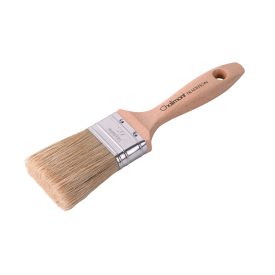
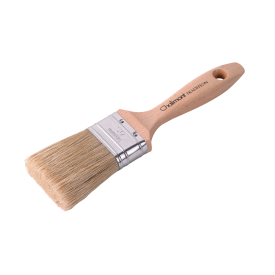
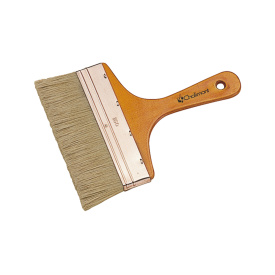
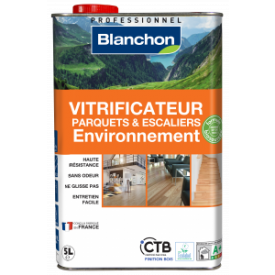
Finishing: ideally, apply the protective finish before installation to treat concealed surfaces. For oak, allow 2–3 coats of floor varnish.
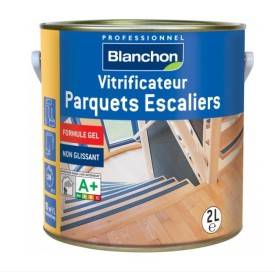
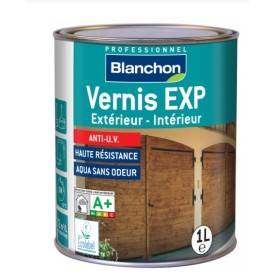
Unfinished oak must be protected before first use. Without protection, marks from shoes and impacts quickly become embedded in oak’s open grain. Recommended options:
For routine cleaning, use a slightly damp cloth and a pH-neutral cleaner. Recommended relative humidity: 45–65%. Check the fixings for tightness once a year.
Laminated oak is one of the most durable woods for an indoor staircase: its density of around 700 kg/m³ gives it excellent resistance to frequent foot traffic. Unlike solid wood, laminated timber does not warp over time as humidity changes – a real advantage for a staircase exposed to seasonal changes.
Important before buying: this model is sold without a handrail. If you want a wooden-spindle handrail included in the kit, FONTBRUNO + handrail combines the staircase and handrail in one kit, with a total width of 85 cm.
The two models have exactly the same structural dimensions (210x30 mm cross-section, 259 cm footprint, 280 cm height, 14 treads and 19 cm going). The only difference is the handrail: the version without a handrail (this model) requires one to be ordered and fitted separately; the version with a handrail includes a wooden-spindle handrail in the kit and has a total width of 85 cm.
Oak (700 kg/m³) is slightly denser and more wear-resistant than beech (680 kg/m³). In appearance, oak has a more pronounced grain and a naturally warmer colour (golden to brown, depending on exposure); beech has a more even grain and a pale, slightly pinkish colour. The choice depends on the look you want and how it fits with the other interior woodwork.
No. Laminated oak is a class 2 wood: it copes well with changes in indoor humidity but is not designed for direct exposure to the weather or outdoor moisture. For an outdoor staircase or a damp area, a staircase made from Douglas fir, larch or pressure-treated wood is needed.
Oak is a hard, dense wood (700 kg/m³). Driving screws without pilot holes creates lateral pressure that can split the wood along the grain. Pre-drilling with a bit narrower than the screw (around 70% of the shank diameter) prevents this and makes driving the screw easier. This is particularly important for screws near the edges of treads and stringers.
Without a handrail, the recommended stairwell opening is 259x82 cm. With a handrail, the width increases to 85 cm, so allow for an opening of 259x85 cm. These dimensions are measured at finished floor and ceiling level, including coverings.
A laminated oak staircase that is properly protected and maintained has a service life of 30–50 years under normal indoor use. Renewing the finish (floor varnish every 5–7 years) is the main maintenance requirement. The treads can be sanded and refinished several times during their lifetime, depending on their remaining thickness.
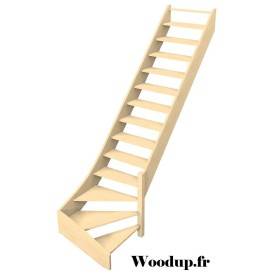
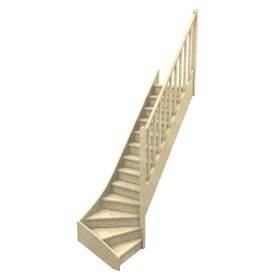
FONTBRUNO + wooden-spindle handrail – same dimensions, with handrail included
CHEVALARD – straight staircase in beech or fir, two wood species

No questions yet.
You might also like

Dispatch within 10 days when the product is in stock *.
* Except bespoke products
Dispatched within 6-8 weeks for personalised and made-to-measure products.

Payment in 1 or 3 instalments at no extra cost. Bank transfer, cheque or PayPal

Satisfied or refunded if returned within 14 calendar days (Sundays and public holidays included) following delivery.





No questions yet.